
The Ledger

Research Archive

The Visible Strain: A Gentle Squeeze in Private Credit

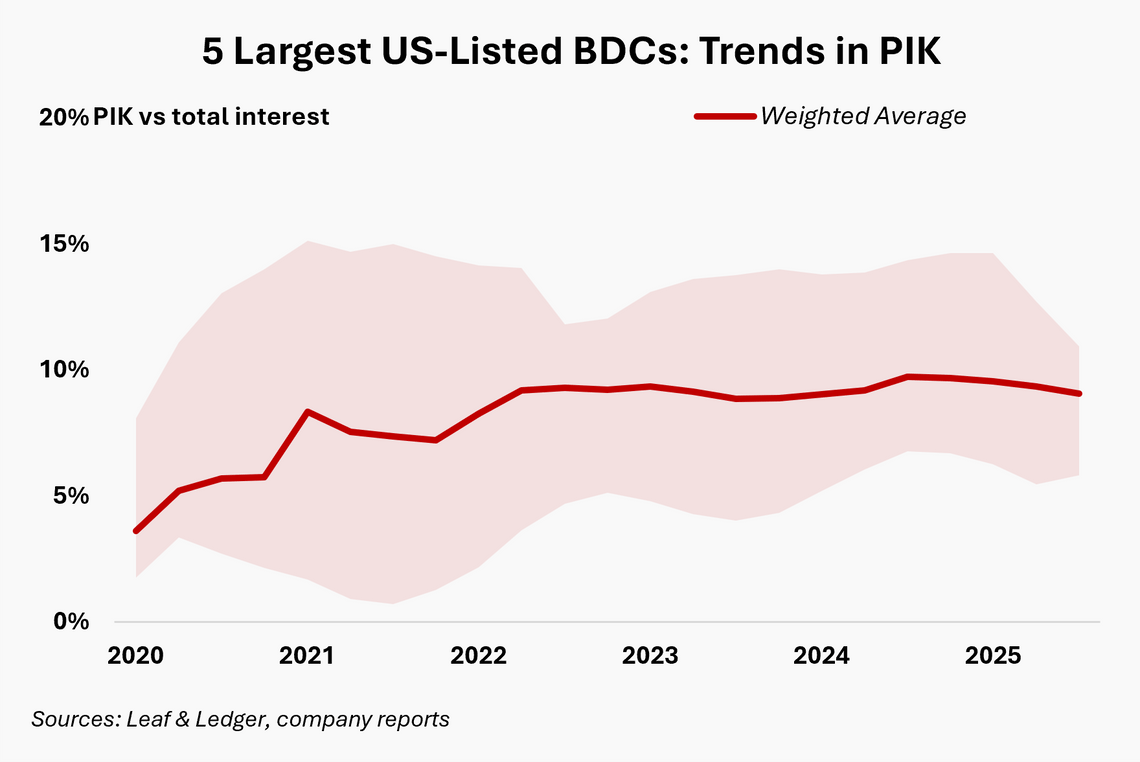
BDCs provide a rare, regulated window into the opaque world of private credit. Analyzing $65B in assets, we track the shift from cash interest to payment-in-kind (PIK) and the visible lag in defaults. The data reveals a gentle but persistent squeeze. It is proof that high rates are breaking borrowers, just slowly. While not a crash, the system is accommodating stress rather than resolving it.
Nov 27, 20256 min read

The CMBS Window on Private Asset Valuations in Europe

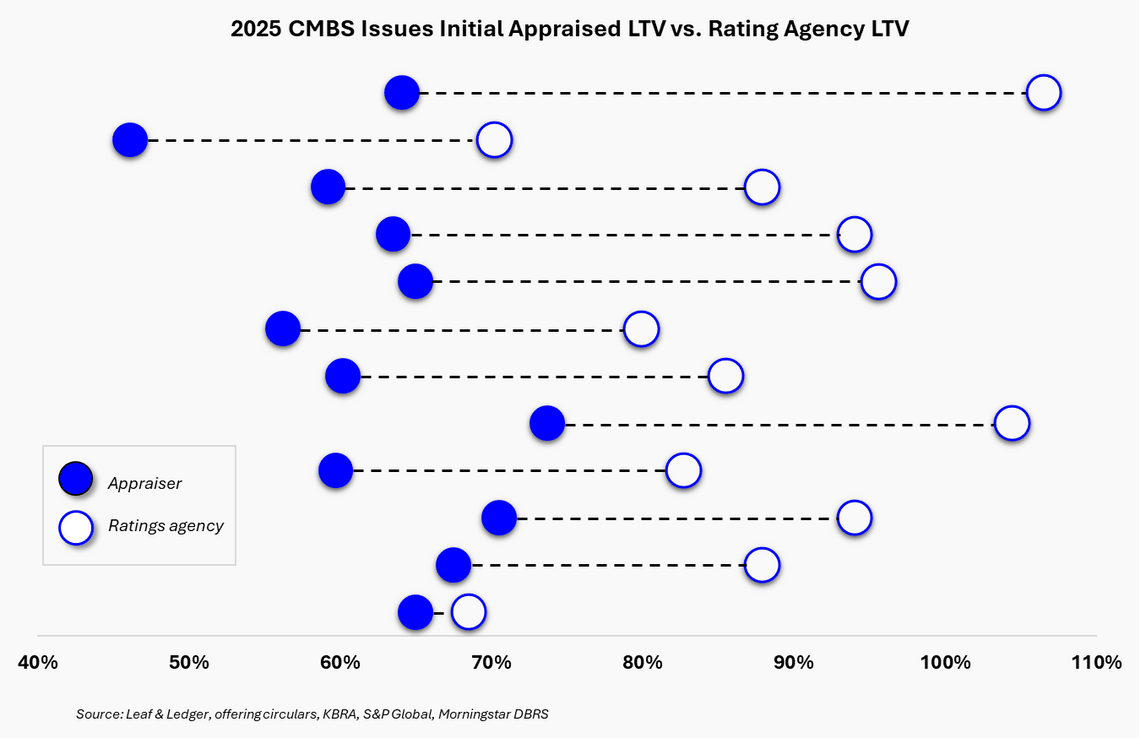
Europe’s 2025 CMBS cohort offers a clear window on private valuations. Using disclosures across €6.9 billion of issuance, we show how appraised marks diverge from rating-agency values, with most deals in a 23% to 34% haircut band and a 29.6% median. The piece explains why this gap emerges, where it may persist in private markets with thin price discovery, and how investors should treat reported cushions and re-underwrite cash flows.

Nov 3, 20257 min read

Where the Capital Went: Allocation Tilt, New Drivers, and Shifting Liquidity

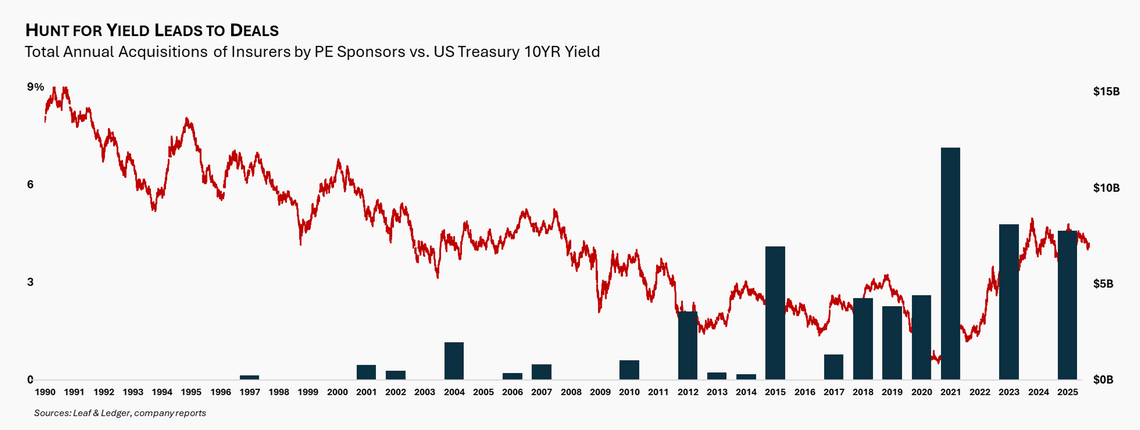
Life insurers have tilted away from Treasuries into structured and private credit, propelled by private equity ownership and NAIC treatment. Those flows are repricing markets, consistent with inelastic markets research that small, persistent allocations move prices. Record CLO issuance shows the shift; First Brands’ bankruptcy flags underwriting risk. The next test arrives as rules tighten in 2026.

Oct 16, 20256 min read

The Insurance Capital Capacity Engine: the Cylinders that Powered Growth

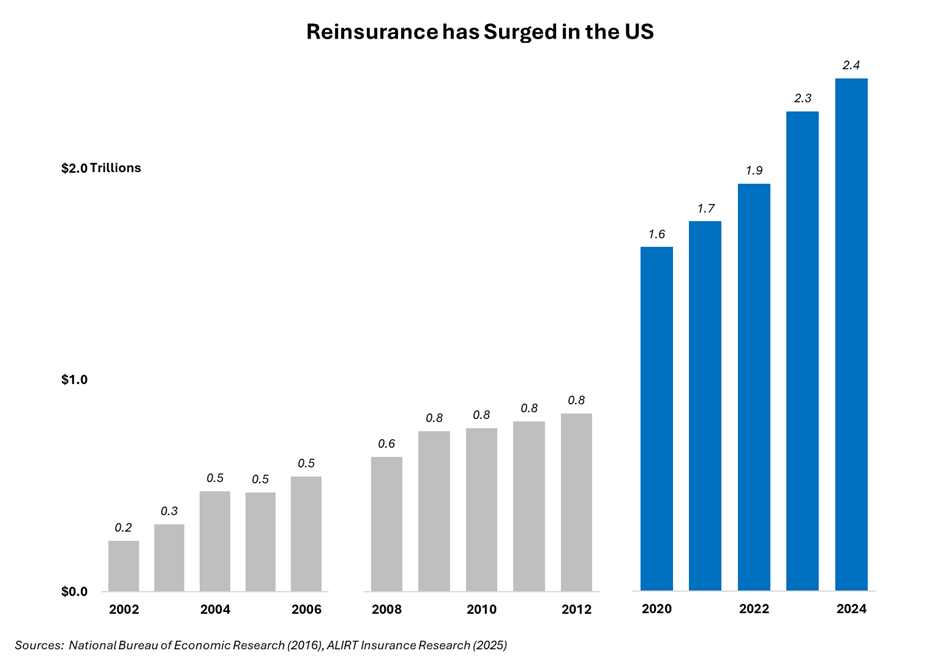
PE-linked insurers now run a four-cylinder capacity engine: asset-intensive reinsurance lowers required capital; tax positioning lifts retained earnings; evolving solvency rules reshape charges on private assets; and short-horizon balance sheet funding via funding agreements and FHLB advances converts claims-paying strength into deployable cash. Together these steps explain the post-2019 surge in insurer deployable capital.

Oct 2, 20257 min read

Why This Plumbing Was Built

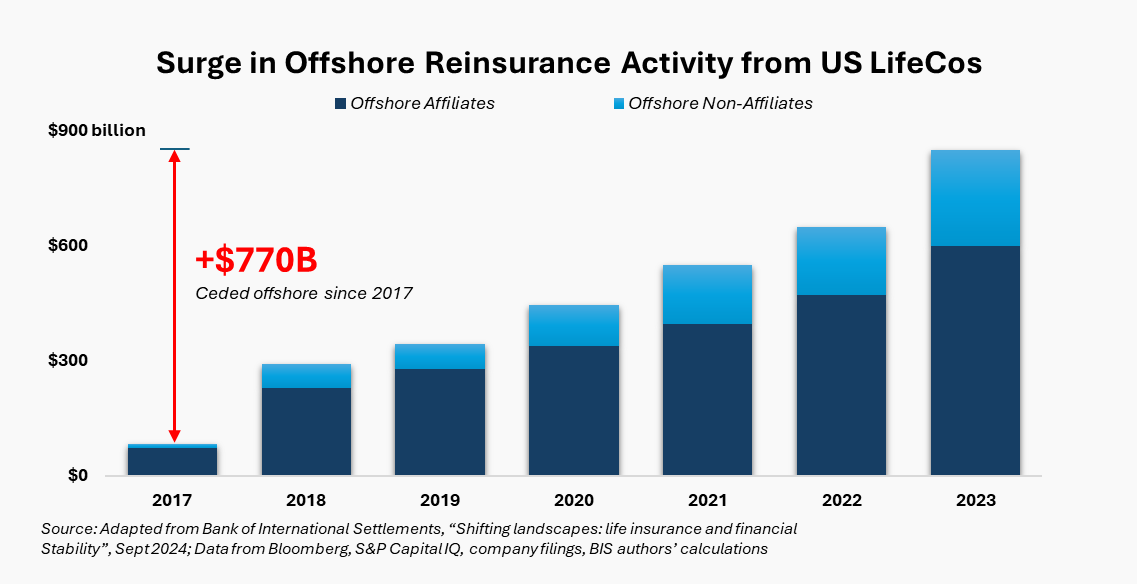
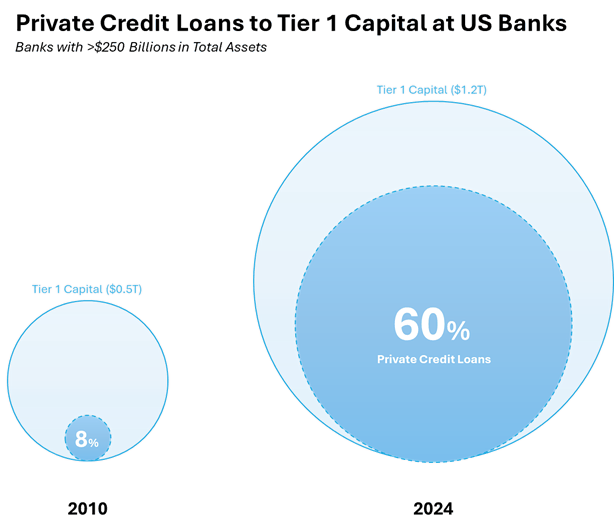
Credit has migrated from banks to private platforms, and the centre of gravity has moved with it. Insurers, through asset-intensive reinsurance, are releasing capital and shaping who is financed, on what terms, and when liquidity turns. The same channel that supplies credit in calm periods can amplify stress when cushions shrink. We map how this transmission affects pricing, liquidity, funding terms, and exits across markets.

Sep 18, 20254 min read

Out of the Light

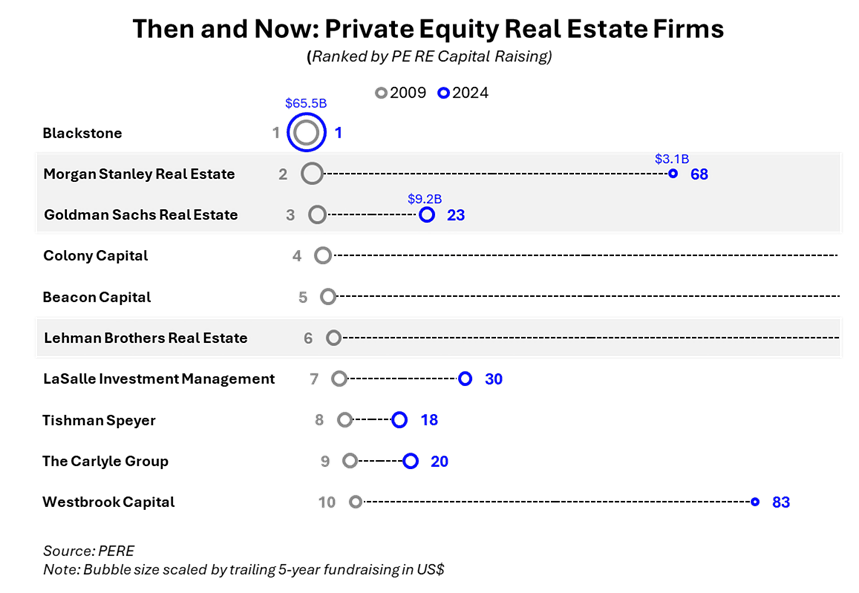
How risk migrated from bank marks to insurance clocksIn the early 2000s, the head table in private real estate sat largely inside the banks. Morgan Stanley and Goldman set the terms, the models ran overnight, and the Lucite deal toys were piled high. Then Lehman sank and the GFC hit. Post-crisis rules fenced in the balance sheets regulators could directly supervise. Money migrated to platforms outside that perimeter, and to insurers (who slowed the clocks). While commercial real estate was never

Sep 9, 20253 min read

Summer Series Part II: Extend and Pretend, Again — A Behavioral History of Debt Deferral

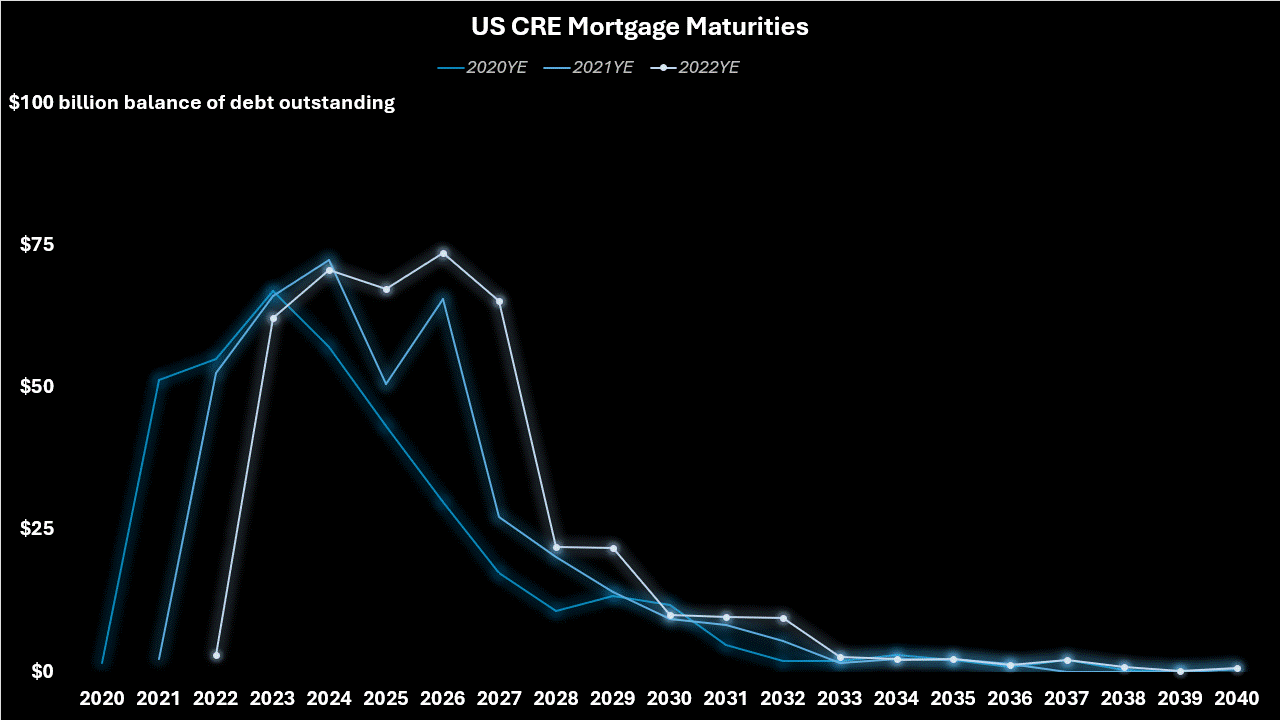
"Extend and pretend" is not a post-GFC invention. It is a century-old instinct. In Part II of our Summer Series, we explore how debt deferral, maturity wall fears, and strategic inaction have repeated across cycles, from 1930s bank policy to 1990s Japan to today's CRE market. With historical quotes, visuals, and behavioral insight, we examine why delay often becomes the most rational path, until it no longer is.

Aug 5, 20258 min read

Summer Series Part I: Lending Signals and the Repricing of Office Values

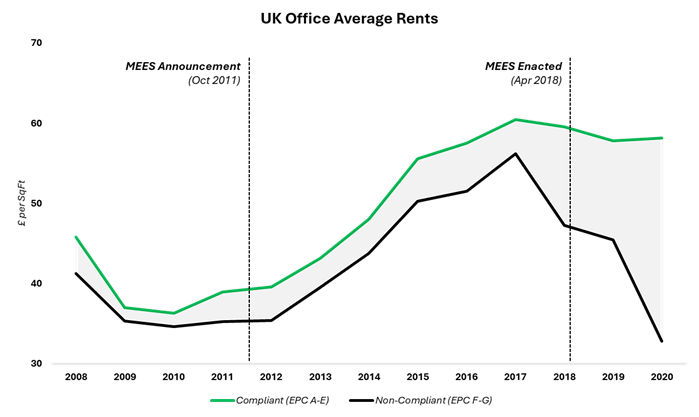
As capital markets recalibrate around sustainability and obsolescence risk, the office sector faces a stark financing divide. Modern, green assets are commanding tighter spreads and higher leverage, while legacy buildings are being priced out of the debt market entirely. In this analysis, we explore how lenders are redrawing the underwriting rulebook and what it means for the future of office real estate.

Jul 8, 20255 min read

Research Review: ECB Study Quantifies Climate Risk Discounts in CRE

New ECB data shows climate risk is no longer a theoretical threat in commercial real estate. It’s being priced into asset values, liquidity, and investor behavior. From physical risk discounts to the premium on future-ready assets, the shift is reshaping capital flows across the eurozone.

Jun 12, 20254 min read

Strategic Insight: Rethinking Underwriting — How Machine Learning is Reshaping CRE Modelling

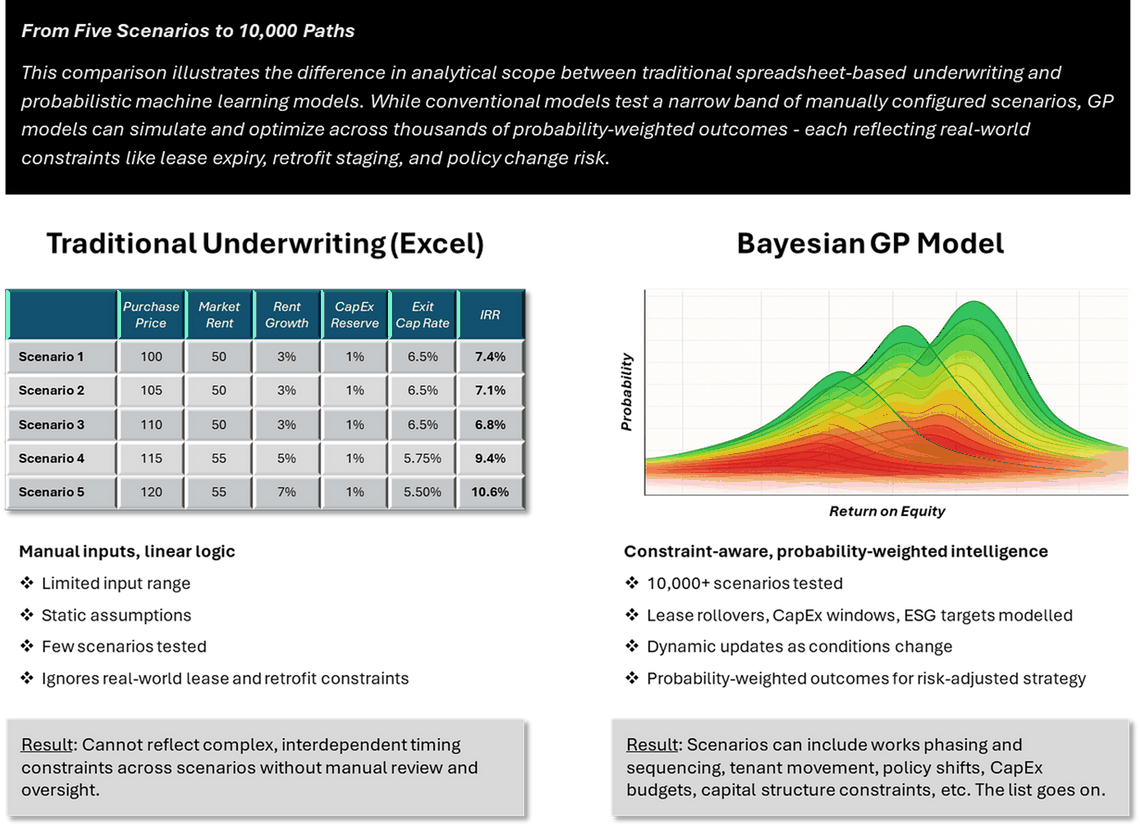
Retrofitting is no longer a technical upgrade, it's a central investment decision. As regulatory pressure and ESG mandates reshape the market, traditional underwriting struggles to keep pace. This article explores how probabilistic modelling and machine learning offer investors a strategic edge, helping them navigate lease constraints, capital timing, and retrofit complexity with greater confidence.

May 27, 20255 min read

Year in Review: 2024

In this 2024 Year in Review, we examine how regulation, capital markets, and occupiers converged to make decarbonization a defining theme in commercial real estate. From EU directives to SEC rules, the year reset expectations across the sector, and set the stage for 2025.

Dec 12, 20244 min read

Policy Brief: The Efficiency Reckoning Begins

As 2024 draws to a close, energy performance is moving from ESG checkbox to financial driver. Regulation, valuation standards, and early capital signals are converging to reprice inefficient assets across Europe. The efficiency reckoning has begun.

Nov 28, 20243 min read